
Throughout the 2050 Regional Transit Plan and Specialized Transportation Plan process, MMT heard the following themes, which emerged as consistent priorities of community members, current riders, stakeholders, and specialized transportation providers.
2050 Specialized Transportation Plan Priorities
Through various engagement opportunities, the specialized transportation community of riders and providers were encouraged to share their top priorities based on proposed and recommended strategies. This feedback was collected through in-person meetings through an interactive polling activity, as well as a digital survey question.
In response to the proposed strategies, the community shared the following as top specialized transportation strategies:
- Improvements to help people access bus stops more safely, including sidewalks, safer crosswalks, shelters, and lighting. – Since many specialized transportation users are dependent on paratransit and specialized transportation providers, improvements to help people access bus stops safely, including sidewalks, safer crosswalks, shelters, and lighting will increase mobility options for all riders.
- Prioritize vehicle purchases so they are appropriately sized for the rider’s needs, shared between agencies, and regularly maintained. – Smaller vehicles, increased coordination among providers, and increased consideration for the rider’s on-board experience can help those requiring specialized transportation to feel more comfortable.
- 24/7 phone hotline and website to help direct people to the most appropriate transportation options. – Reserving rides presents complications for riders, whereas a centralized hotline can help riders understand the services they qualify for, and how to easily reserve or book upcoming rides.
- Set new standards of service for all specialized transit providers receiving funding from PPACG & MMT received the same number of responses. – Creating and implementing service standards will provide trip consistency and reliability, while streamlining provider coordination. This will provide riders with a more seamless experience when riding specialized transportation.
2050 Specialized Transportation Plan Feedback Themes
The top specialized transportation strategies are similar to what was heard through discussions with current riders and social services organizations. In discussions with providers, providers would like to have a more centralized or streamlined ride reservation system, which is not as important to specialized transportation clients and riders. Additional feedback themes are summarized below.
Accessibility
- Create an inclusive transportation system that focuses on the experience of the rider.
- Improve accessibility to existing fixed-route and express-route service that is not currently designed for riders with disabilities.
- Incorporate sensory-sensitivity considerations as fixed-route buses are loud.
- Equip drivers with training to be sensitive and courteous to all disabilities.
Operations
- Make booking, canceling, or reserving single and/or reoccurring rides easier and adaptable to changes in everyday life.
- Increase the coordination and collaboration between organizations to maximize the impact of limited resources for riders.
- Consider centralizing services into one entity to increase efficiencies rather than sharing information between several providers.
- Eliminate “no-ride scenarios” to those needing to ride transit, paratransit, or specialized transportation.
- Create a voucher system for on-demand service should be explored to increase flexibility in the services disabled riders can take.
Partnerships
- Cultivate partnerships between organizations to support a network of services.
- Provide educational opportunities for riders to learn more about the different services and eligibility requirements.
2050 Regional Transit Plan Priorities
Through various means of engagement, community members reacted to the seven proposed elements of the 2050 Regional Transit Vision. The vision is composed of multiple recommendations and strategies to expand service and introduce innovative technologies.
The public prioritized the following top three proposed 2050 Transit Vision recommendations in order of importance:
- Earlier/later service on all routes, which would expand service on all routes to begin at 6:00 a.m. on weekdays, 6:00 a.m. on Saturdays, and 7:00 a.m. on Sundays. Service would also be extended until midnight Monday through Saturday, and until 9:00 p.m. on Sundays.
- Investment in transit facilities, bus stops, and bus speed/reliability, which would include additional infrastructure to better connect bus stops, increase speed and reliability, and ensure on-time bus operations.
- Improved frequency on existing routes, which would include improvements to all existing routes to run at least every 30 minutes all day throughout the week.
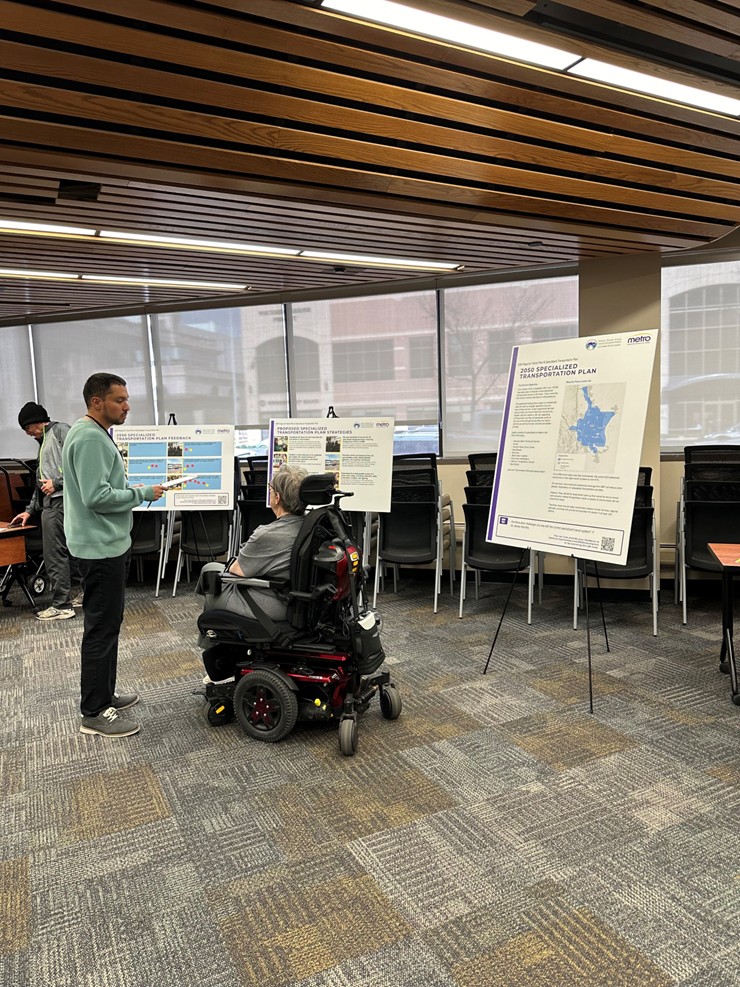
This feedback was shared through a digital polling questionnaire as well as an interactive in-person activity at the open house on Tuesday, April 30, 2024.
Open House Photos

2050 Regional Transit Plan Feedback Themes
Stakeholders, community members, transit riders, and the public provided feedback on their current experiences and desires for a future transit system. The priorities align with feedback heard throughout the process, which focused on developing an aspirational, actionable, responsive, and funded plan to increase transit connectivity and operations. Throughout the process, the public expressed a desire to ride transit on the condition it was more convenient with improved infrastructure, such as bus stops, connected sidewalks, and bicycle-friendly amenities.
Additional key themes and feedback are summarized below.
Process
- Create a plan that is aspirational, actionable, and responsive to the region’s population growth and development.
- Identify community partnership opportunities to enhance transit services and operations.
- Explore funding streams to address transit and mobility gaps.
- Consider future transit planning with land use planning to improve the effectiveness of housing, access to essential services, and transit.
- Investigate ways to incentivize transit use.
Connectivity
- Connect transit to City and regional destinations, like the airport, higher education institutions, nearby jurisdictions, and military installations.
- Explore the option to connect to City and regional systems through light rail and passenger rail.
- Improve connectivity to Downtown Colorado Springs for pedestrians, cyclists, and transit riders, which allows them to seamlessly use all three modes.
- Ensure residents have access to transit when commuting to and from jobs to help grow the region’s workforce.
Operations
- Improve the accessibility and safety of bus stops and transfer locations.
- Expand service hours and frequency of service to attract additional ridership.
- Consider adding enhanced transit services on popular corridors, such as North Nevada and Colorado Avenue.
- Explore low-cost or free-fare travel on certain routes to increase ridership.
Increase the salaries and benefits for bus drivers to attract more drivers to the industry.