
Emergency Transportation
Events of the past five years demonstrate that that the Pikes Peak region is susceptible to emergencies caused by heat, wildfires, flooding, landslides, lightning strikes, tornadoes, winter storms, power outages, and pandemics. As natural disasters become more frequent, the need to ensure the safety of people of all ages and abilities is of utmost importance.
In early 2023, PPAAA distributed a survey to older adults about a variety of needs, including transportation safety. Out of 244 respondents, 77 (or 31.6%) selected “I don’t know” when asked how they would travel from home in the event of an emergency. Some of these responses were coupled with others as part of a “select all that apply question,” but the results reveal there is a sizable number of people living in the Pikes Peak region who are feeling insecure about their transportation options in an emergency. This underscores the need for more improved information systems, such as the database, hotline, and website as recommended in the Specialized Transportation Plan’s Strategy 1.
Figure 15. Summary of PPAAA Survey Responses Regarding Emergency Transportation
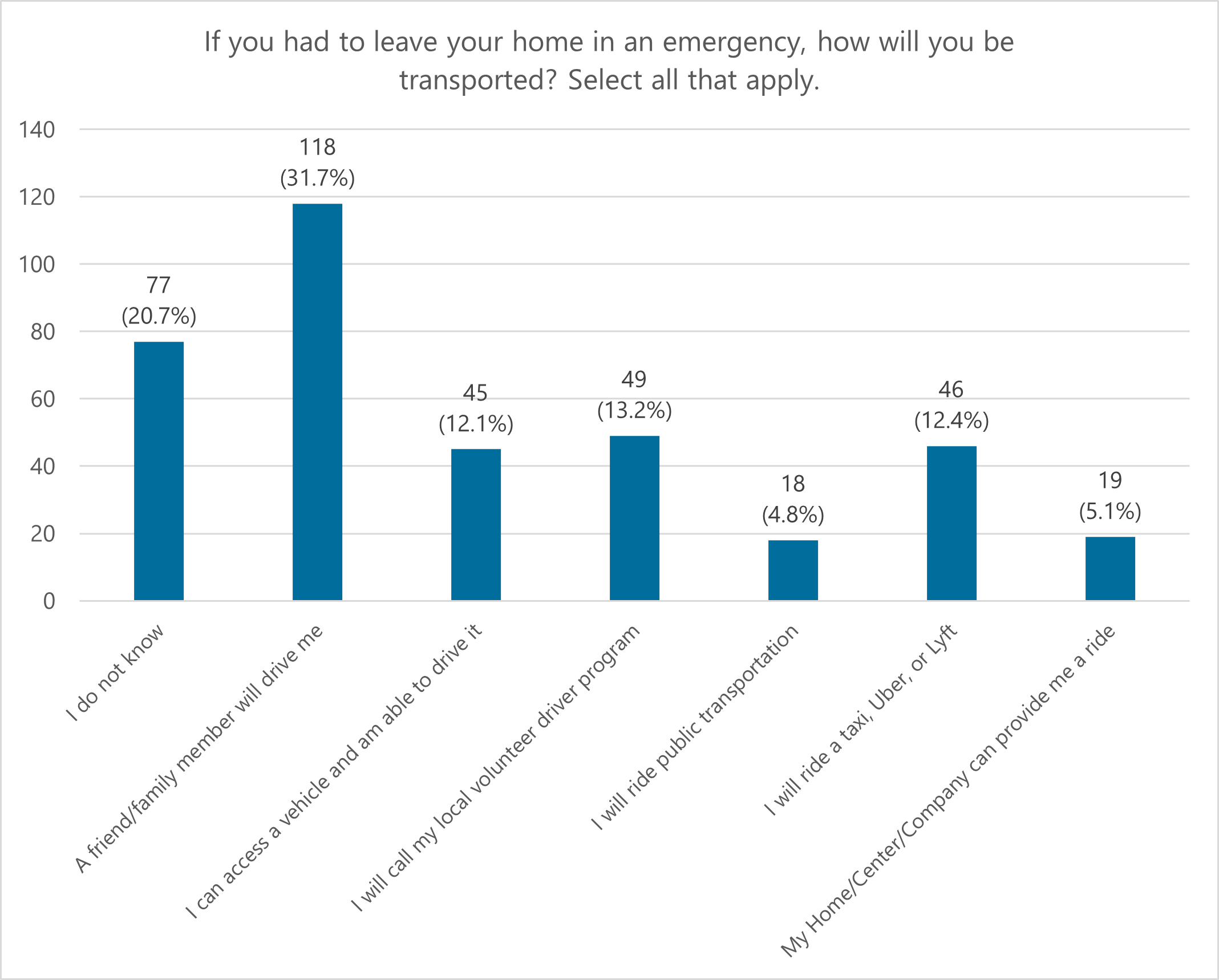
Some responses are expecting that Uber, Lyft or taxis will have the supply of drivers to provide such support. Others are expecting a local volunteer driver program, which may include existing specialized transportation services. All these services – and the dedicated individuals who drive and maintain the vehicles – are important assets for supporting emergency resilience.
Project types for consider for future funding include:
- Evacuation training programs for all local transportation providers.
- Development of a comprehensive emergency guide specifically tailored for individuals with disabilities and seniors, as well as their caregivers and families.
- Creation and deployment of a checklist to help individuals with disabilities and seniors prepare for emergencies.
- Incorporation of resiliency and emergency preparedness into the planning and operations of local transportation providers.
These programs should be tailored to prepare for and respond to the variety of emergency hazards and scenarios that are likely to occur in the Pikes Peak region. A seamless network of communication that overcomes institutional silos is critical to a successful emergency response. Finding ways to overcome these barriers begins in the planning process and should rely on supportive funding from the public and private sectors. There are examples of emergency planning already occurring at other levels of government, including El Paso County.